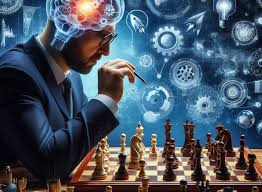

Chess and quantum computing might seem like they belong in two entirely different worlds. One is a centuries-old board game played by grandmasters and casual hobbyists alike. The other is a cutting-edge field pushing the boundaries of physics and computer science.
But here’s the twist—many of the skills and thought processes used in chess can directly apply to quantum problem-solving. And if you think that sounds like a stretch, stay with me. The deeper you look, the more the two start to feel like distant cousins.
Let’s explore five surprising ways your chessboard might be quietly preparing you for the next big leap in computational thinking.
1. Thinking Several Moves Ahead
One of the first things you learn in chess is that your next move isn’t just about now—it’s about what happens later. Skilled players mentally project possible moves several turns ahead, considering how each choice affects the future state of the board.
Quantum problem-solving works in a similar way, especially when designing algorithms or predicting how a quantum system will behave. Instead of just one possible outcome, you have to keep track of multiple potential paths simultaneously.
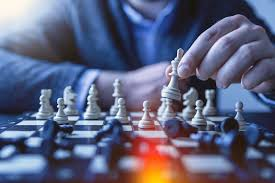
Chess connection: Calculating “if I move my knight here, then they might move their bishop there” is a lot like considering how a quantum system’s wavefunction might evolve depending on your next step.
Lesson: Both require foresight, flexibility, and the ability to evaluate branching possibilities without getting lost in the complexity.
2. Managing Uncertainty and Probability
In classical chess, the board is visible—you always know the exact position of every piece. But in blitz chess or games with incomplete information (like simultaneous exhibitions), uncertainty creeps in. You may not have perfect recall of every position, so you weigh probabilities and make educated guesses.
Quantum systems are inherently probabilistic. A particle can exist in a superposition of states, and measurements collapse that uncertainty into a definite outcome. Problem-solving in this realm often means working with probabilities instead of certainties.
Chess connection: When you’re unsure whether an opponent will sacrifice a piece for a tactical advantage, you evaluate the probability of that move based on their style, the position, and game history—much like predicting the probability distribution of a quantum event.
Lesson: Accepting uncertainty as part of the problem, rather than something to be eliminated, is a mindset both chess players and quantum scientists must master.
3. Pattern Recognition in Complex Systems
One hallmark of strong chess players is their ability to instantly recognize familiar patterns—a pawn structure signaling a specific endgame, a piece alignment hinting at a tactical trap. This skill comes from experience and study.
Quantum problem-solving often involves recognizing recurring structures in complex data, such as interference patterns, error correction codes, or repeating algorithmic states. Spotting these quickly can save enormous amounts of computational effort.
Chess connection: Seeing the shape of a “smothered mate” before it even fully appears is similar to identifying a promising state in a quantum algorithm before it completes.
Lesson: The faster you can see structure in apparent chaos, the more efficient your decisions become.
4. Sacrificing Short-Term Gains for Long-Term Advantage
Chess teaches you that sometimes you must lose a piece to win the game. Sacrifices are strategic investments—giving up material now to gain positional or tactical benefits later.
Quantum computing often involves trade-offs too. You might use more qubits (quantum bits) than seems necessary to make an algorithm more stable, or accept longer run times to ensure higher accuracy.
Chess connection: Just as sacrificing a rook might open up the board for a devastating attack, using extra quantum resources can pave the way for solving a much harder problem.
Lesson: Both disciplines reward long-term vision over short-term comfort.
5. Adapting to Unpredictable Moves
In chess, no matter how well you plan, your opponent can surprise you with an unexpected move. The best players don’t panic—they adapt. They re-evaluate the board and adjust their plan without losing focus.
Quantum systems can be equally unpredictable. Noise, decoherence, and environmental factors can derail even the most carefully designed quantum experiment or algorithm. The ability to pivot quickly and re-strategize is crucial.
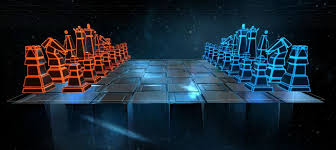
Chess connection: Reacting to an opponent’s shocking queen sacrifice isn’t so different from adjusting an algorithm when a quantum gate introduces unexpected error.
Lesson: Flexibility under pressure is a survival skill in both worlds.
Why This Connection Matters
It’s easy to think of chess as “just a game” and quantum computing as an untouchable frontier of science. But the mental disciplines overlap more than you’d expect. Both require:
- Strategic thinking: Planning not just the next step, but the steps beyond.
- Handling complexity: Managing many variables without losing track.
- Comfort with uncertainty: Making confident moves when the outcome isn’t guaranteed.
In fact, some educators are now using chess to help students develop the cognitive skills that could one day be applied to quantum computing and other complex problem domains.
How to Train Your Quantum-Chess Brain
If you’re intrigued by this connection, here are a few ways to blend chess thinking with quantum-style problem-solving:
- Practice “multi-branch” thinking in chess:
After each move, list three different continuations and evaluate them. This mimics quantum branching in a simplified way. - Introduce uncertainty into training:
Play games with hidden information or under time pressure to simulate probabilistic decision-making. - Study famous sacrifices:
Learn how grandmasters turn short-term loss into long-term gain, then think about how that mindset applies to resource management in algorithms. - Embrace post-mortem analysis:
In both chess and quantum computing, reviewing “what happened” is critical. Study not just wins, but losses—especially the ones where you were surprised.
Final Thoughts
Chess won’t teach you how to build a quantum computer. But it will sharpen the same mental muscles you’ll need if you ever work on—or even just appreciate—the complex problems quantum computing aims to solve.
Both worlds reward patience, creativity, and a willingness to think in layers. They challenge you to see beyond the obvious, navigate uncertainty with confidence, and adapt when the unexpected happens.
So the next time you’re deep in a chess match, remember: you’re not just playing a game—you might be quietly training for the quantum future.
And if you’re a quantum scientist who’s never played chess? Maybe it’s time to pick up a board. You might be surprised at how much it teaches you.